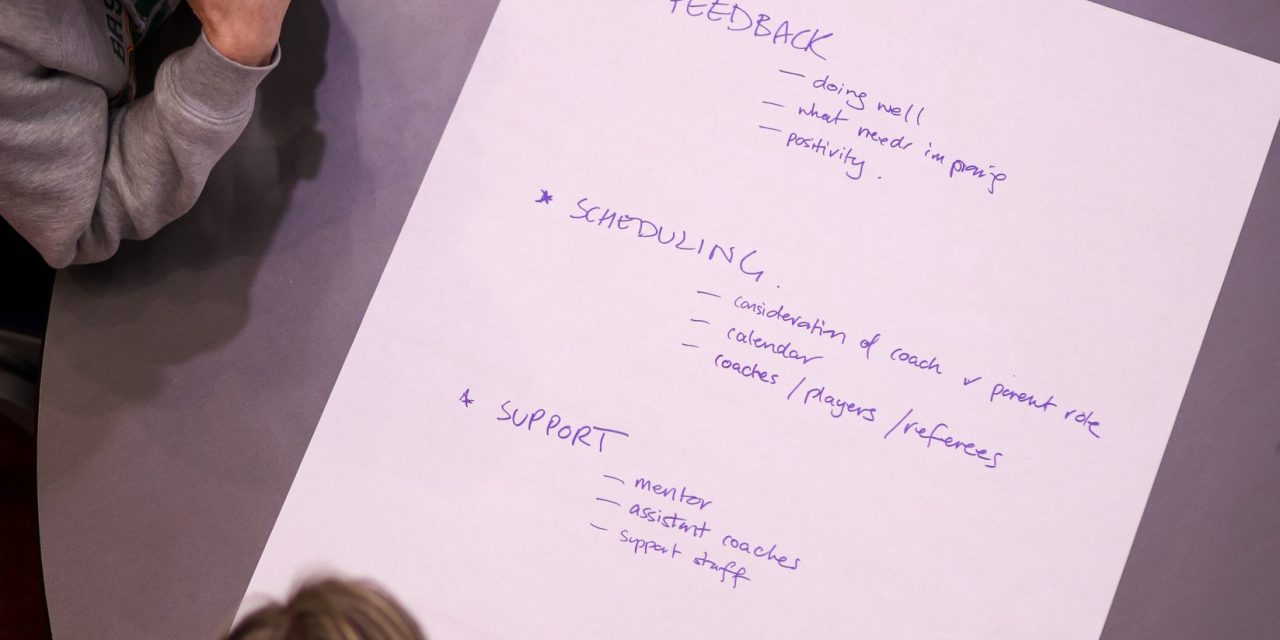
On Saturday May 31, Basketball Tasmania, in collaboration with former Opals head coach Jan Stirling, hosted a Women in Coaching Focus Group. Sixteen coaches from across the state came together for a frank, energised discussion – sharing experiences, raising challenges, and offering clear, practical ideas to improve the coaching environment for women.
The group delivered a clear-eyed assessment of the ongoing challenges affecting participation, development, and retention in coaching, and offered constructive, forward-looking ideas and opportunities to strengthen coaching for the long run. While many positives were acknowledged, several areas of improvement were identified – especially around time demands, culture, development opportunities and support systems.
Key Outcomes & Next Steps
This article outlines the key barriers identified during the recent Women in Coaching Focus Group, alongside proposed solutions to better support, retain, and empower coaches across our basketball community.
Time Commitment & Burnout
The demanding, year-round structure of the basketball calendar was discussed at length. Finding time to meet coaching commitments alongside other responsibilities was consistently raised as a challenge, with the acknowledgment that women often navigate a more complex juggling act with life and family responsibilities. Feelings of being overextended, burnt out, conflicted, or guilty – particularly when coaching impacted time with their own children – were commonly shared.
Immediate opportunities:
- Strengthen club-level support structures through the appointment of assistant coaches and team managers to distribute the workload and reduce individual strain.
- Promote flexible coaching arrangements (eg. job-sharing, time oI, coach coverage) to support the pursuit of development opportunities, personal wellbeing and balancing commitments.
- Encourage self-regulation and stepping back when needed, with a focus on creating safe environments where coaches feel supported in setting boundaries, asking for help and communicating workload and wellbeing.
- Incorporate greater consideration of the dual coach/parent role in scheduling to reduce conflicts and the guilt of not being able to watch their children play.
Longer-term opportunities:
- Basketball Tasmania to lead a review of the basketball calendar with a focus on reducing overload and introducing much needed periods of inactivity to allow coaches, referees and athletes to rest. We identify that this will not be a quick fix and will require dialogue and collaboration with the wider community.
- Expand access to paid coaching opportunities, particularly to support participation by younger coaches who are balancing school, part-time work and commitments in sport.
Confidence & Coaching Culture
Low confidence and self-efficacy were consistently identified as significantly impacting enjoyment in the coach role. Common challenges included self-doubt, second-guessing, and feelings of intimidation and were closely linked to coaching environments being overly critical and lacking in positive feedback, encouragement, or affirmation. The absence of psychologically safe learning spaces was also raised as a major barrier to progression and confidence growth.
Immediate opportunities:
- Deliver feedback that is constructive, strengths-based, and offered with care and purpose.
- Foster learning cultures where mistakes are viewed as a valuable part of development.
- Strengthen peer-to-peer support and more positive, respectful interactions between coaches.
- Introduce mechanisms, such as exit interviews, to monitor and improve coaching culture.
Longer-term opportunities:
- Implement clear, consistent feedback structures across state and high-performance programs to help coaches grow, feel valued and have their development acknowledged.
- Offer self-belief programs that focus on building confidence, resilience, and challenge the intrinsic pressure to “know everything”.
Networks, Mentorship & Development
Access to mentorship and personal development opportunities was raised as a major gap. The absence of informal, formal and social support structures was seen as limiting coaches’ ability to grow, receive guidance, and feel validated. The need for more intentional, structured approaches to personal development and the need to build a more connected coaching community was clearly established.
Immediate opportunities:
- Coaches to more proactively create and request in-game and on-court opportunities to observe and be observed, supported by feedback.
- Offer flexible and informal mentorship opportunities that allow for intermittent, low-pressure engagement (with the acknowledgement that mentorship doesn’t need to be time-intensive).
- Increase access to practical tools such as session plans, age-specific curriculum, and structured resources.
- Introduce development coach quotas in state programs and ensure those roles have meaningful engagement and influence within teams.
Longer-term opportunities:
- Build a stronger, more connected coaching community between all coaches, supported through peer networks, shared learning and digital platforms.
- Establish a dedicated coach support hub – a safe space to ask questions, seek advice and throw ideas around, as well as access mentorship opportunities, group-learning and connection.
- Offer development opportunities that push coaches outside of their comfort zone within supportive and psychologically safe environments.
Value, Visibility and Access
A recurring theme was a sense of being undervalued or overlooked. Experiences of being passed over for opportunities despite comparable capability was shared. The feeling that knowledge and skill sets were not recognised or respected to the same degree as male peers.
Gender stereotypes and gendered assumptions were also noted to persist in coaching roles – including being defaulted to girls’ teams or receiving greater scrutiny when adopting assertive coaching behaviours (loud, commanding ect.) that do not align with traditional female norms.
The pressure to conform to traditional norms of “female” leadership styles was raised as a limiting factor in showing up authentically in coaching roles.
Practical barriers such as travel costs and limited paid coaching roles further impacted access – particularly for the participation of younger coaches.
Immediate opportunities:
- Actively showcase and celebrate the contributions and diversity of female coaches through social media, in plans, at events (and in education).
- Use targeted EOIs to increase the engagement of female coaches in FDP/SDP sessions and aim for balanced gender representation across state programming.
- Recognise coaching contributions with coaching packs (whiteboard, apparel) provided at no cost.
- Introduce supports such as travel subsidies, reduced fees for children of coaches, and volunteer recognition schemes to increase retention and sense of value.
Longer-term opportunities:
- BTAS to lead efforts in challenging gender stereotypes in the coaching, with targeted visibility initiatives – eg. positioning female coaches as role models for male coaches and athletes.
Conclusion
This session demonstrated the strength, insight, and passion of the women involved in coaching across Tasmania. While progress has been made, there is still work to do. These outcomes provide a foundation for collective action across clubs, programs, and the broader basketball community. We thank all participants for their valuable contributions and look forward to working closely with clubs to put these insights into practice.